



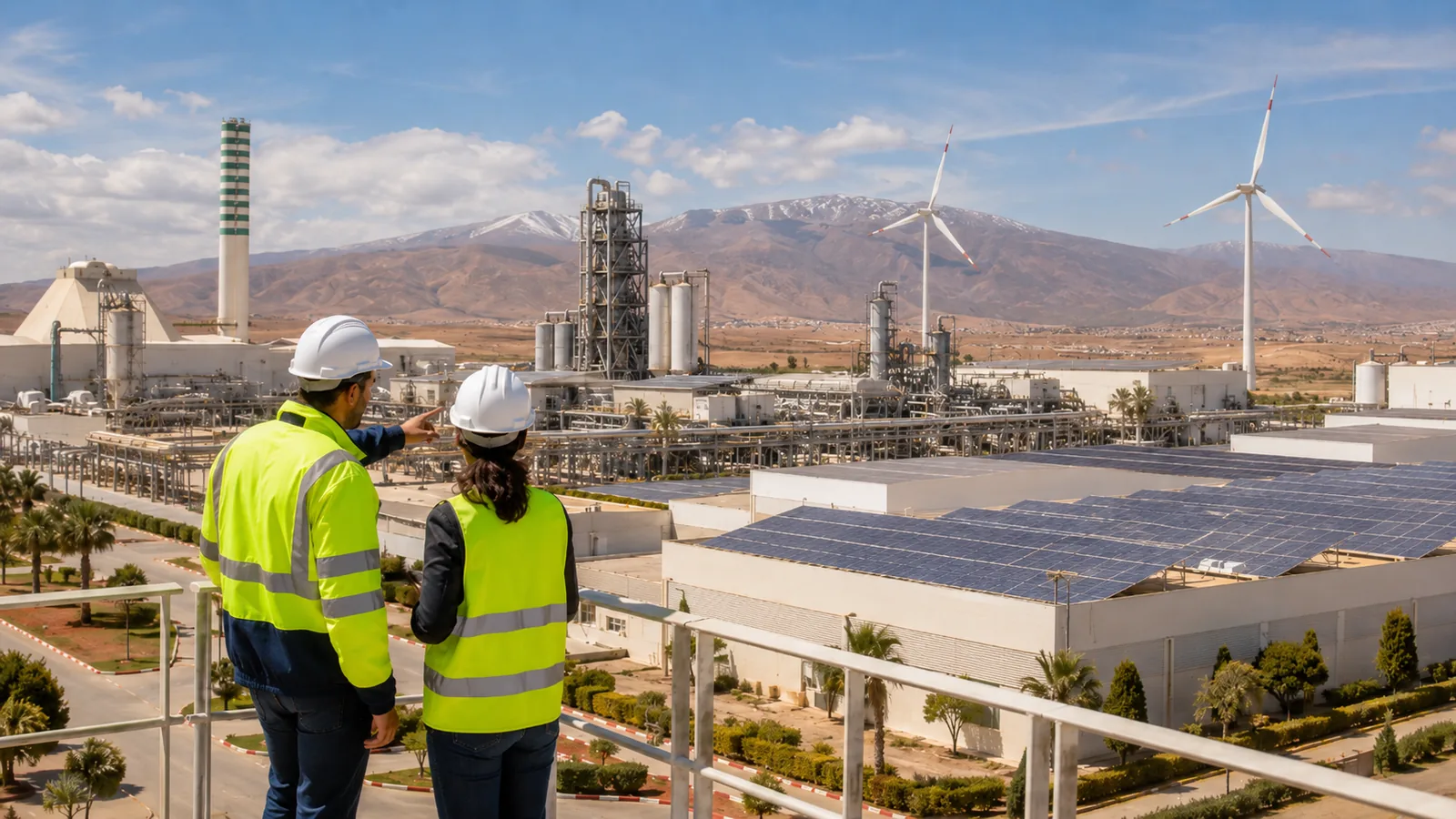
For many years, carbon footprints were treated primarily as a regulatory obligation or a reporting exercise. Today, leading industrial companies use them as a genuine driver of transformation.
The question is no longer simply how much a company emits, but how it can produce differently, reduce costs over the long term and strengthen its competitiveness.
At UCOTRA Consulting, we see that the most effective decarbonization consulting services go well beyond measuring emissions. They form part of an integrated approach that combines industrial strategy, energy performance and targeted investment.
The carbon footprint is a starting point, never the end goal
A carbon footprint identifies the main sources of Scope 1, 2 and 3 emissions. It provides the essential baseline for building a credible roadmap.
Companies create value, however, when they translate those findings into investment decisions.
This is the point at which an effective decarbonisation consulting strategy succeeds or fails.
Turning emissions into investment opportunities
Industrial companies now have access to a wide range of technologies that can reduce emissions and operating costs at the same time.
The projects we support include:
- converting industrial processes to lower-emission technologies;
- electrifying selected industrial uses;
- installing on-site photovoltaic generation for self-consumption;
- using wind power where operating conditions make it viable;
- recovering energy from biomass;
- implementing energy-efficiency and heat-recovery programmes;
- optimising production flows and energy consumption.
Each project is assessed not only for its environmental impact, but also for its economics, expected return, industrial risks and available financing mechanisms. This is where structured finance advisory helps turn a technical solution into a credible, investable project.
Decarbonization as a competitiveness lever
The benefits extend well beyond reducing CO₂ emissions.
Companies that invest in their transition typically gain:
- a lasting reduction in energy costs;
- greater control over regulatory risks;
- easier access to selected international markets;
- stronger appeal to investors and business partners;
- greater resilience to energy-price volatility.
In other words, decarbonization becomes an industrial performance programme.
An integrated approach from strategy through execution
UCOTRA Consulting supports the full value chain:
- carbon footprint assessments;
- climate strategy definition;
- decarbonization roadmap development;
- investment identification and prioritisation;
- business-plan development;
- financing research and structuring;
- transformation roadmap delivery.
This integrated approach enables industrial companies to turn an environmental constraint into a genuine competitive advantage.
Our experience across a range of industrial sectors shows that a well-designed decarbonization strategy can deliver significant emissions reductions, substantial energy savings and lasting improvements in economic performance. Structural Aerospace Morocco illustrates this approach: its decarbonization plan led to a photovoltaic project, more than 900 tonnes of CO₂ avoided each year and an approximately 25% reduction in its energy bill.