



You might come to the Périgord for Lascaux, then extend your stay with another cave, a village, a walk and a meal. The site that triggered the trip becomes the gateway to a territory. Around it, other places become part of the stay; other professionals meet their customers.
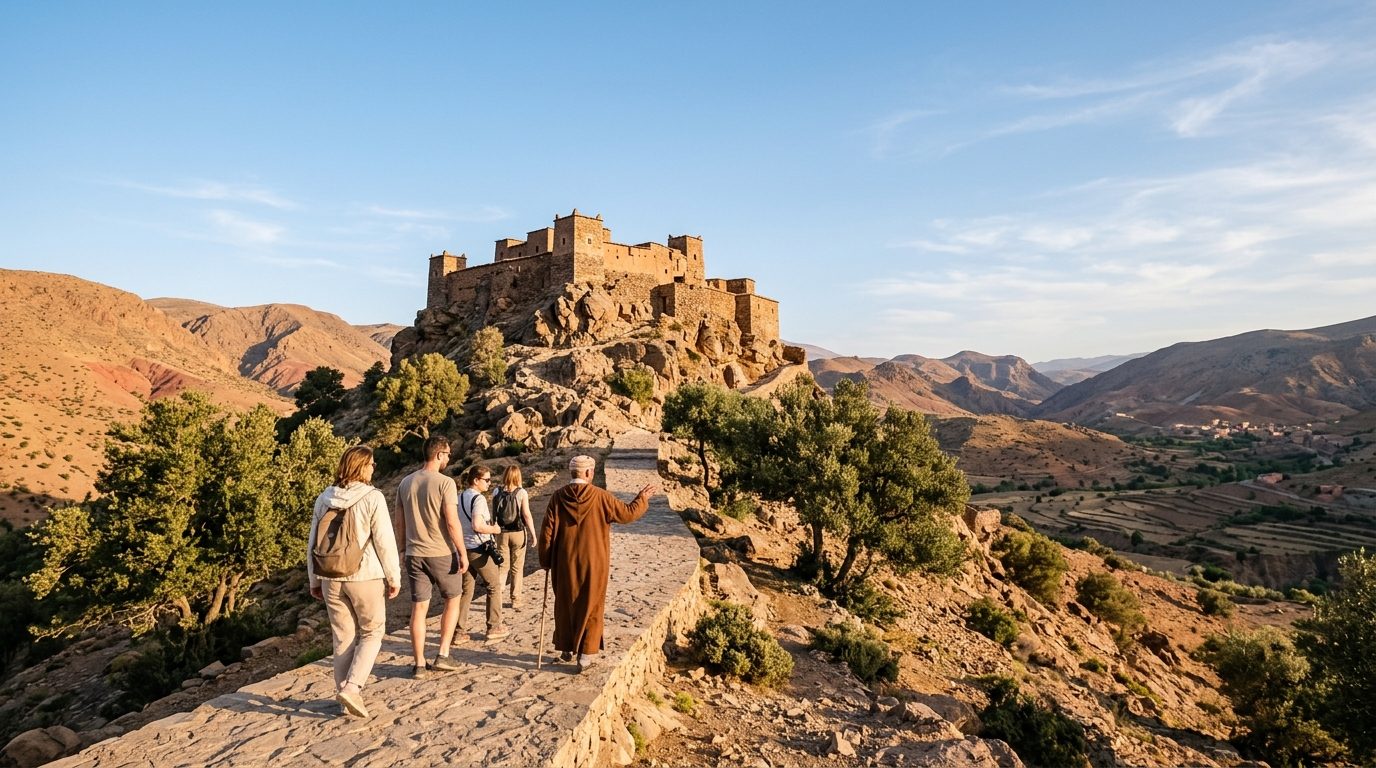
This logic opens up a perspective for Moroccan territories. A neglected cave, a little-known collective granary, a landscape noticed on screen can become the starting point of a development project. They still need a story, an organised way to discover them, and a way for local people to make a living from them. It is in this shift from heritage to economic activity that part of the potential of our cultural economy lies.
The Périgord: giving a place the power to drive a territory
At Lascaux, the original cave has been closed to the public since 1963. Yet it can still be discovered through replicas, including Lascaux IV. Preservation led to the invention of another way of conveying the emotion of the place.
The offer then extends to the scale of the territory: guided or storytelling tours, experiences combining cave art and gastronomy, a single ticket covering four sites in the Vézère valley. These offers give visitors concrete reasons to continue their journey. The Périgord brand takes shape in this continuity between heritage, landscapes and a way of life.
Faced with an abandoned cave in a Moroccan territory, the first question is what project it could make possible. Its geological, ecological or archaeological value must be established, as must the conditions for its protection and possible opening. Where an interior visit is incompatible with its fragility, an interpretation space, a reconstruction or an outdoor trail can convey what gives it value.
Around an accessible site, a modest but well-designed offer could combine a trained guide, a maintained trail, a stop at a local producer and an activity for families or schools. A single booking point would make the whole experience easier. Natural heritage would thus become a meeting point for several trades, with revenues contributing to its upkeep. The quality of the visitor journey and its viability matter more than the scale of the initial infrastructure.
The agadirs: letting the stones tell their story
During our study on the cultural strategy of Souss-Massa-Drâa, we discovered the agadirs, the collective granaries also known in the plural as igoudar. Their presence in the landscape and their architecture catch the eye. Their depth is revealed when you look at their social function: storing, protecting, organising collective life.
These places provide the material for a distinctive territorial story. Through them, one can tell of the resources that were preserved, the building know-how adapted to the environment and the forms of trust that made living together possible. Built heritage, community memory and landscape then become chapters of a single story.
An agadir route could be built around a few sites chosen together with their rights holders and communities. Each would carry one episode of the story, drawing on testimonies collected and validated locally. Residents trained in heritage interpretation, craftspeople and producers could provide complementary stops. Formats designed for schools would also make this route a way of passing heritage on to the territory’s young people.
The promise would be a strong one: come and discover how a territory learned to protect what was precious to it. Keeping it would require reliable opening hours, suitable access, fair pay for those involved and an agreement on how revenues are allocated. The territorial brand would draw its credibility from these commitments. It would be rooted in a story its people recognise and want to share.
Ouarzazate: when the territory enters the frame
With cinema, the movement is reversed: the image of the territory can travel before the visitor does. Its landscapes and architecture become places of fiction. This visibility opens up an additional opportunity: making people want to discover the territory, and developing locally the trades that produce these images.
This link between attractiveness and the organisation of an industry is precisely what the study conducted by UCOTRA in 2015 for the creation of a One Stop Shop zone dedicated to cinema in Ouarzazate addressed. In June 2026, the start of works on the International Film City gave this integrated approach renewed relevance, with production, post-production and training hubs among the facilities announced.
For the territory, value is built over time: set designers winning new contracts, technicians developing their skills, local businesses becoming regular suppliers. It can also extend into discovery trails linking filming locations, film trades and local heritage, with the necessary permits and well-documented content.
Ouarzazate thus extends the lesson of the agadirs and the caves: a distinctive feature becomes an economic strength when stakeholders organise themselves to pass it on, produce it and make it known. Culture can then support both a destination and a professional industry.
Which place could open a new chapter for your territory?
For a territorial decision-maker, the starting point can be very concrete: choose a place no one has yet given a viable project. Bring together those who know it, those who protect it and those who could develop an activity there. Then test public interest, pilot a first experience and cost its operating conditions before committing any investment.
This work must lead to choices: what territorial promise, which beneficiaries, which operator, what funding and what role for local residents? Success will be measured as much by the conservation of the site as by professionals’ incomes, local orders and the transmission of know-how.
A territory’s next flagship project may begin in front of a door that is closed today. Giving it a future takes a vision, then a method to make it achievable.
Are you a local authority, an institution or an investor with a place in mind? Let’s discuss its potential. UCOTRA helps you define a positioning, build a business model and prepare a roadmap to bring the site to life.
Let’s give this heritage a project worthy of its history.