



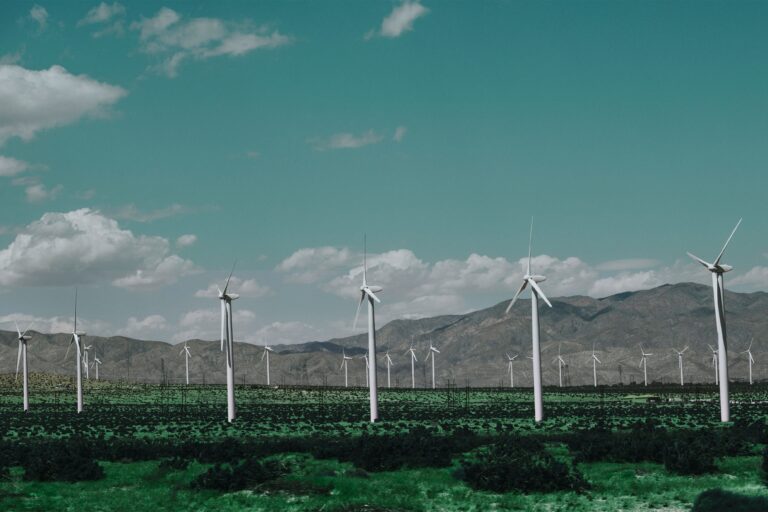
Why industrial decarbonization is becoming a business priority in Morocco
Industrial decarbonization in Morocco is no longer a topic reserved for sustainability departments or large exporting groups. It is becoming a practical competitiveness issue: energy costs, access to export markets, investor confidence, operational resilience and the ability to answer more demanding customer requirements.
For an industrial company, the key question is not only how to reduce emissions. The more strategic question is how to turn the transition into a measurable performance agenda. That is where a consulting firm in Morocco can create value: by connecting climate targets with operations, finance, investment decisions and market positioning.
Morocco has real assets in renewable energy, industrial platforms, logistics and international value chains. The opportunity is clear, but it requires a disciplined roadmap. Decarbonization only becomes a competitive advantage when it is translated into priorities, numbers, governance and execution.
A Moroccan market context with stronger expectations
The Moroccan economy remains dynamic, with industrial sectors, tourism and domestic demand supporting investment. At the same time, companies face pressure on productivity, energy efficiency, talent, financing and export readiness. These constraints make low-carbon transformation more concrete for management teams.
Public institutions and international organizations increasingly present industrial decarbonization as a lever for national competitiveness. The topic is linked to energy efficiency, circular economy, sustainable water management, industrial innovation and Industry 4.0. In practice, companies are not simply expected to produce cleaner. They are expected to produce better, with stronger data, better control and more resilient operating models.
What leaders should clarify before launching a decarbonization project
Start with a strategic objective
A company may decide to install solar capacity, improve equipment efficiency, redesign processes or optimize energy consumption. These actions can be useful, but they should be linked to a clear strategic objective: cost reduction, export protection, customer requirements, certification, margin improvement, investor readiness or brand credibility.
Connect energy, processes and economics
A serious diagnosis should go beyond electricity bills. It should review production performance, equipment yield, maintenance practices, raw-material losses, procurement, logistics, available investment capacity and customer expectations. The objective is not to produce a long report. It is to translate the diagnosis into business decisions.
Work on financing from the beginning
Decarbonization may require significant CAPEX. To avoid blocking good projects, management teams need to model investment needs, expected savings, payback periods, risk reduction, possible incentives and implementation phases. A weakly prepared project looks like a cost. A well-structured project becomes an investment case.
Where UCOTRA Consulting can create value
Clarifying the roadmap
Many companies know they need to act but do not know where to start. A useful roadmap should be short, prioritized and connected to business goals. It can separate immediate actions, quick-return initiatives, structuring investments and longer transformation workstreams.
Turning data into management decisions
Low-carbon transformation requires reliable data. Companies often have scattered information across production, maintenance, finance, procurement and quality. UCOTRA helps define a simple management system: the right indicators, a realistic follow-up rhythm, clear responsibilities and financial readability.
Relevant indicators may include energy consumption per unit produced, energy cost by line, scrap rate, material losses, equipment performance, logistics cost, waste recovery rate and share of renewable energy. The value is not in tracking everything. It is in tracking what helps leadership decide.
Linking decarbonization, innovation and competitiveness
Industrial decarbonization can also open innovation opportunities: new products, improved processes, stronger compliance, access to new markets and better answers to buyer expectations. For Moroccan companies, this can support industrial upgrading and differentiation.
Frequent mistakes to avoid
Launching actions without a business case
Every meaningful action should be connected to an expected impact: lower costs, lower risk, market access, compliance, quality, productivity or stronger credibility with customers and investors.
Confusing communication with transformation
Environmental claims do not replace operational work. Customers and investors increasingly expect proof: indicators, methods, trajectory, completed actions and consistency between promises and execution.
Underestimating internal organization
Decarbonization mobilizes general management, production, maintenance, finance, procurement, quality, HR and sometimes sales teams. Without clear governance, projects lose momentum. Roles, decision rights and reporting routines must be defined early.
A practical five-step approach
1. Frame the ambition
Clarify whether the priority is competitiveness, cost reduction, export readiness, financing, compliance, innovation or customer attractiveness.
2. Build a decision-oriented diagnosis
Analyze energy use, processes, losses, risks and opportunities, then translate findings into clear choices.
3. Prioritize the workstreams
Rank actions by impact, complexity, cost, timeline and contribution to the company strategy.
4. Build the business case
Quantify investment needs, savings, indirect gains, risks and financing options.
5. Manage execution
Set simple indicators, regular reviews, clear governance and decision points so the roadmap becomes operational.
Related UCOTRA expertise
This type of project can mobilize several UCOTRA practices: decarbonization, climate and sustainability, operational performance, transactions, grants and structured finance, innovation management and market and feasibility studies.
Conclusion: make the transition a performance project
Industrial decarbonization is not only an environmental response. For Moroccan companies, it can become a performance, innovation and growth project. The companies that move first with discipline will be better positioned to control costs, answer buyer expectations, access financing and strengthen their long-term competitiveness.
UCOTRA Consulting supports leaders in building pragmatic roadmaps that connect strategy, industrial transformation, operational performance and investment decisions.
FAQ - Industrial decarbonization in Morocco
Why is industrial decarbonization important for Moroccan companies?
It affects competitiveness, energy costs, export readiness, financing opportunities and the ability to meet customer and investor expectations.
Can an SME start without a large investment budget?
Yes. The first steps often involve measurement, operational discipline, loss reduction, energy monitoring and prioritization. Larger investments should come after a solid business case.
What does a consulting firm bring to a decarbonization project?
A consulting firm connects technical opportunities with business priorities, financing, governance, implementation planning and measurable performance indicators.
Which UCOTRA services are most relevant for this topic?
The most relevant services include decarbonization and sustainability, corporate strategy, operational performance, structured finance, innovation management and feasibility studies.